In the last post I looked at what is problem-based learning and how it is applied. This time I wanted to look at a case study of a success story of problem-based learning at the University of Melbourne. The focus of this case study is a postgraduate subject at the University of Melbourne. It is a collaborative subject between The Department of Biomedical Engineering in the Melbourne School of Engineering and the Melbourne School of Business at the University of Melbourne. In this course teams of students from the Masters of Business Administration program and Masters of Engineering program collaborate in proposing a problem through to finding a solution. This do this by being immersed within a clinical environment to identify needs, invent solutions and implement the solution. The students take it through all aspects of the design with input from the teacher with prompting questions and facilitating discussions. This program was inspired by the Biodesign program at Stanford University, USA.
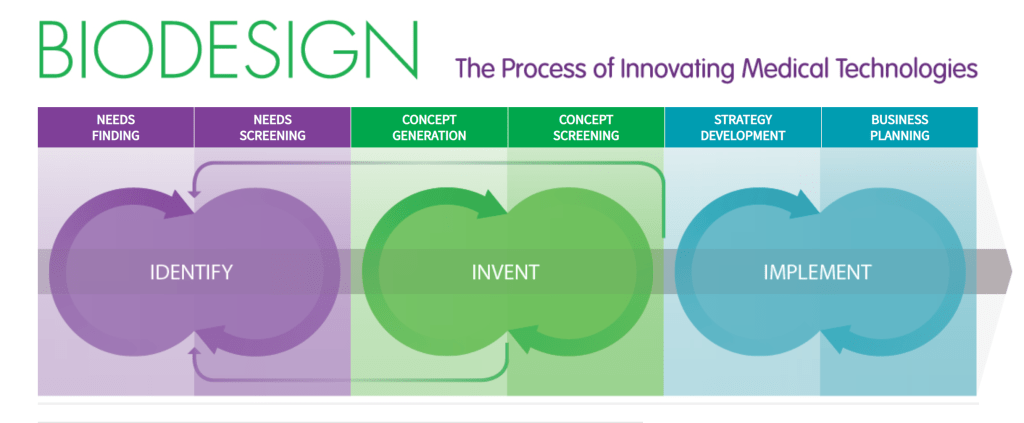
Since its launch in 2016, the Biodesign Innovation course at the University of Melbourne it has lead to the formation of the three companies which have been successful in generating funding for the company. Student experience has also been undoubted been excellent with testimonials such as the two below from former students and no CEO and COO of Navi medical technologies.


“BioDesign Innovation has had more of an influence on my future career path than any other subject I studied through my MBA.” Alexander Newton, MBA (2017), Business Analyst, Unimelb; CEO, Navi Medical Technologies
“BioDesign is all about problem solving. Developing creative solutions with a great team was totally rewarding.” Shing Yue Sheung, Bachelor of Commerce (2014) and Master of Engineering (2015-2017). COO, Navi Medical Technologies.
PBL is based on the constructivist framework which focuses on the [1]
I proposed that there are three reasons behind the success of the problem-based learning approach.
- A well scaffolded framework – the biodesign program scaffolds the learning through a clear framework with learning outcomes embedded into it. No matter what problem or solution you choose you will have to engage with learning within this well scaffolded framework. [2][3]
- A knowledgeable and engaged instructor – while some have argued that the instructor is not essential in such a scenario, I would argue that without a knowledgeable and engaged instructor student would not be guided to the right approaches. [4]
- Uses relevant real-world problems that motivate the students – It is a student focused approach which allows students to find their own problems, assess them according to which interests them, they work on addressing the problem and finding the best solution. This has an element of self-reflection and continuous feedback.[5][6]
One of the key limitations of this approach is that it is hard to assess but may be the assessment is in the achievement itself [6]. May be the assessment should not be assessed as a report or a score but we need to develop a new assessment that assess the outcomes and the approach not the presentation of content.
References
[1] Biodesignmelbourne. (2018) https://biodesignmelbourne
[2] Savery, J. R., & Duffy, T. M. (1995). Problem based learning: An instructional model and its constructivist framework. Educational technology, 35(5), 31-38.
[3] Lewis, T., Petrina, s. and Hill, A. M. (1998) Problem Posing-Adding a Creative Increment to Technological Problem solving. Journal of Industrial Teacher Education, 36 (1)
[4] Dahms, M. L., Spliid, C. M., & Nielsen, J. F. D. (2017). Teacher in a problem-based learning environment–Jack of all trades?. European Journal of Engineering Education, 42(6), 1196-1219.
[5] Jonassen, D. H., Howland, J., Moore, J., & Marra, R. M. (2003). Learning to solve problems with technology: A constructivist perspective.
[6] Clyne, A. M., & Billiar, K. L. (2016). Problem-based learning in biomechanics: Advantages, challenges, and implementation strategies. Journal of biomechanical engineering, 138(7)
 Community of Inquiry